Friday, 16 January 2026
"In the name of Allah, Most Merciful, Most Gracious!" بِسْمِ اللّهِ الرَّحْمـَنِ الرَّحِيمِ
 
Rus En Ar
Moscow's Historical Mosque, a Symbol of Islam Since Imperial Russia, Reopens After Restoration
19 December 2025
Moscow's Historical Mosque, a Symbol of Islam Since Imperial Russia, Reopens After Restoration
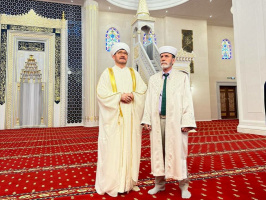
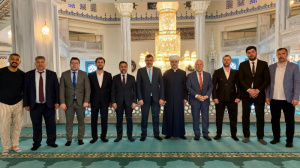
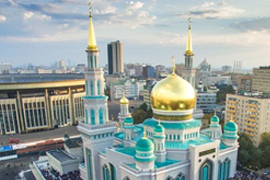
The building of the Historical Mosque, which served as the main symbol of the Islamic faith even during the Russian Empire, has reopened in Moscow following restoration.

Until 1904, the mosque was known as the Cathedral Mosque, and was later renamed the Historical Mosque after the construction of the Large Moscow Mosque in Vypolzov Lane.
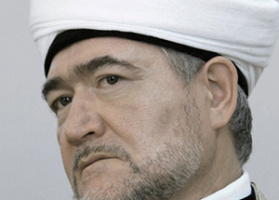
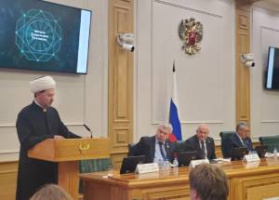
– The mosque is the oldest Muslim house of worship in the capital, 200 years old. The Tatar Settlement (the historical area where the mosque was built, located in the Zamoskvorechye district) dates back to the 14th century, – said Mufti Ravil Gaynutdin, Chairman of the Religious Board of Muslims of the Russian Federation, at the opening ceremony.

To Be a Mosque, Yet Not Look Like One
The first stone building of the Historical Mosque is associated with the name of first-guild merchant Nazarbay Khoshalov. Researchers say that it was he who purchased the site on Bolshaya Tatarskaya Street for the faithful. Permission was granted personally by Governor-General Dmitry Golitsyn, who was overseeing the city's restoration after the 1812 fire.

However, the community was forced to comply with the authorities' condition: they were not allowed to erect a traditional minaret on the building. "The building... should not resemble a mosque in appearance and should not be called a mosque," stated the city authorities' permit. As a result, a single-story stone building, indistinguishable from neighboring houses, was constructed with funds from benefactors.

Built by a Trusted Architect of Alexander II
Tsar-Reformer Alexander II, who contributed significantly to strengthening interethnic unity in the empire, permitted the addition of a minaret and dome to the mosque.

Roman Lunkin, Head of the Center for the Study of Religion and Society at the Institute of Europe of the Russian Academy of Sciences, told Metro: It is no coincidence that this happened under the "Liberator" Tsar, as his reign saw a thaw in various spheres of life, including religion.
– At that time, a multi-level ideology was being formed in the Russian Empire, encompassing different religious denominations, – the religious scholar explained.

The work was carried out by architect Dmitry Pevnickiy, who was held in high regard by the Tsar: in 1858, he created a sketch for the icon case of Peter the Great's cross, for which he received commendation. Pevnickiy was a well-known architect in Moscow: his works included apartment buildings, Orthodox churches, and the State Bank building in Arkhangelsk. He was familiar with the area where the Historical Mosque was built, as he served as the district architect of the Pyatnitskaya part of Zamoskvorechye.
– Obtaining permission to build a mosque outside the national territory (of the Ufa Spiritual Administration) was difficult – religious buildings were required to blend into the urban landscape. Therefore, a Russian architect was invited to design a building that would harmonize with the structures of Zamoskvorechye, – Lunkin noted.

After the reconstruction overseen by Pevnickiy, the mosque's prayer hall expanded to accommodate 1,500 worshippers.

Millionaire Benefactor
Tatar merchant Salikh Yerzin, whose funds were used to rebuild the mosque, began his career in trade as an errand boy for a local rich man. Eventually, he married the rich man's daughter! Yerzin made his fortune trading Bukhara cotton, establishing the company "Eastern Trading House Salikh Yerzin and Sons."

Yerzin also distinguished himself in charity, assisting both impoverished Muslims and Orthodox Christians. In 1915, thanks to Yerzin's funds, a building for a religious school – a madrasah – was constructed next to the Historical Mosque.

Soon, a magnificent antique chandelier, previously adorning the main prayer hall of the mosque of Moscow's second Muslim parish, appeared in the mosque. The chandelier was donated by the family of the trustee (mutawalli) of the Muslim parish, Mirza Muhammad Vagapov, and his trading partner Alexey Shimko.

Imams of the Historical Mosque: Polyglot and China Expert
The first imam of the Historical Mosque was Seyful-Mulyuk Askhapov. No records about him have survived. Much more is known about the subsequent imams: Rafek Ageyev and his son Khayretdin Ageyev.

Thanks to Ageyev Sr., the Muslim community of Moscow gained clear organization. His son became a renowned popularizer of the Tatar language in Russia. Ageyev Jr. spoke eight languages, served as a translator at the Armory Chamber, translated several monuments of Arabic culture into Russian, and was granted honorary citizenship of Moscow.

The fate of the last Soviet-era imam of the mosque, Abdulla Shamsutdinov, was tragic. In his lifetime, he received religious education in Bukhara and even served as an imam in Kulja, northwestern China. However, in 1936, he fell victim to repressions and was executed on fabricated charges. The imam's wife also perished in an NKVD prison. The Historical Mosque was closed...
– Many today forget that new martyrs exist not only in the Russian Orthodox Church. The repressed imam of the Historical Mosque can also be considered a new martyr, – says Lunkin.

Mosque vs. Engravers
Despite the repressions, many Muslim clergy, like representatives of the Orthodox clergy, actively participated in defending the country from the Nazis. Moscow Tatars, led by artillery general Yakub Chanyshev, attempted to return the building of the Historical Mosque to the faithful. However, these efforts were unsuccessful.

In the post-war period, the mosque building housed organizations of DOSSAF (Voluntary Society for Cooperation with the Army, Aviation, and Navy) and civil defense. In 1967, during the height of the state's struggle against religion, the minarets were demolished. In the late Soviet era, the building housed the printing workshop of the "Artistic Engraving" publishing house.

The decision to return the mosque to the faithful was made only in 1990. The engravers who lived in the building and residents of nearby houses initially opposed this, but by 1991, the matter was resolved amicably.
– Russia positions itself, on one hand, as a country belonging to Christian civilization, and on the other, being Asian, emphasizes Islam, – Yuri Mavashev, Director of the Center for the Study of New Turkey, told Metro. – The traditional bearers of Islamic teachings in our country have historically been the Tatars. It is no coincidence that the building in question is also called the first Tatar mosque. Once, the synergy of Russians and Tatars – Orthodox Christians and Muslims – created Russia in the form we know today, and as the whole world knows it.

gazetametro.ru